
Two Days, One Night
"Two Days, One Night," French, is a movie about a woman with a problem. The problem has to do with her getting fired, and everyone else getting a bonus, and how she wants her job back but to get her job back she has to get everyone to give up their bonus. Suffice to say, this movie would not have been made in America. Marion Cotillard is the woman. She strides about purposefully in tight jeans and durable boots. She wears thin tank tops that reveal shoulders bent by the weight of the world. This isn't "La Vie en Rose" or "Rust and Bone." It's a simple story about one thing and the one woman who's going to make it happen. It is simultaneously the world's most boring movie and the world's most poignant movie. It says big things by showing little things. It's sad and heartwarming, and the ending isn't what you think it's going to be, but it's realistic.
Buy THE TUMOR: "This is one of the weirdest, smartest, most disturbing things you will read this year."
Clackamas Literary Review

I've got a new short story coming out in Clackamas Literary Review, which you can buy now on Amazon. You can read more about the issue here. My story is called "The Urologist."
Buy THE TUMOR: "This is one of the weirdest, smartest, most disturbing things you will read this year."
Sanibel Island

Buy THE TUMOR: "This is one of the weirdest, smartest, most disturbing things you will read this year."
THREAD at Yale

Image via @YaleThread
I'm super excited to share that I got accepted to THREAD at Yale.
"THREAD at Yale, which debuts this summer, June 7-10, 2015, is a gathering of professional journalists and storytellers that does not care whether you work in print, radio, podcasting, or some form we haven’t even thought of yet.
At this program, a small group of storytellers from print, radio, and other media will gather for three days and nights to learn from masters in the field. And from each other. It’s not a conference, and it’s not a workshop.
It’s both. Maybe it’s neither."
I'll be working on a new piece of longform journalism while I'm there.
Buy THE TUMOR: "This is one of the weirdest, smartest, most disturbing things you will read this year."
Neon
Buy THE TUMOR: "This is one of the weirdest, smartest, most disturbing things you will read this year."
Remarketing

Image via Wikipedia
I changed the blurb describing THE TUMOR.
Here's the first incarnation:
"THE TUMOR is a deranged, surreal exploration of our dark places, malignancies that won't stay gone, and the lengths to which a man will go when he goes to war with a determined enemy."
Here's the new incarnation:
"THE TUMOR is a slipstream short story starring an anthropomorphic tumor, a killer husband, and an invisible woman. Based on the author's true life experience with cancer (she's fine now!), this terrifying tale will grab you by the balls and make you scream."
Buy THE TUMOR: "This is one of the weirdest, smartest, most disturbing things you will read this year."
The Tumor Sales

Here are the sales numbers for THE TUMOR to date:
Total copies sold: 89
Total revenue: $541.00
I use Gumroad and Pay What You Want pricing.
Buy THE TUMOR: "This is one of the weirdest, smartest, most disturbing things you will read this year."
The No Comfort Zone Program

Image credit: Matthew Lambros and After the Final Curtain
A few weeks ago, I signed up for an improv class. Basically, the improv class has been pretty disappointing. I only have one prior improv class experience, which was at The Second City. This is not that. The only way I can think to describe this class is to say it feels like the inmates are running the asylum. This is not a good way to learn improv.
In any case, I heard that there were auditions for another improv group last Saturday. I was excited about going, but then I started the improv class that is the inmates running the asylum, and I wasn't sure I wanted to go to the audition. I guess it made me doubt my abilities. But I did some more reading about improv and decided to go.
I went to the audition. I auditioned with another person. There were four people judging us. I didn't think I did very well. I felt disappointed afterwards. Then I was annoyed for the next day.
On Monday, I found out that I got picked to be in the improv group. Which is really exciting. This is a different improv group than the inmates/asylum class one, and I'm excited about it.
I'm nervous about doing something I'm maybe not super great at in front of a group of people, but there are going to be a lot of rehearsals, and I figure doing something is better than doing nothing.
Buy THE TUMOR: "This is one of the weirdest, smartest, most disturbing things you will read this year."
I GET EMAIL

Image credit: zoomar
Hi Susannah,
I'll be honest; I don't think I could afford to hire you as a regular columnist for our site, but I sure would love to. A weekly column with a lot of freedom to write about your opinion on technology would be amazing. But, we are self-funded and slowly growing and not able to pay as well as some of the more well known publications you've worked for before. I've decided to fill out this form anyway because once I would know what it would cost to hire you I have something to look forward to, and maybe one day soon I could return with a solid offer. So, what would it take?
Thanks in advance,
[redacted]
Founder & CEO [redacted]
Buy THE TUMOR: "This is one of the weirdest, smartest, most disturbing things you will read this year."
Would You Pay $100,000 for a Short Story?

Image via little aesthete
The other day, someone paid $200 for THE TUMOR. I'm using Pay What You Want Pricing, so buyers had to pay a minimum of $1, but they could pay any amount above that they want. It got me thinking about pricing.
This morning, I test drove a Maserati Ghibli. 345 HP. It wasn't like driving something better. It was like driving something else altogether. I'm not in the market for a Maserati, but I wanted to understand the value of things and pressing the gas pedal on this vehicle -- the throttle, the noise, the gun of it -- caused something to click in me internally.
I don't know the guy who paid $200 for a 1,546-word short story I wrote. He's a stranger. He emailed me the other day and asked me: How can I repay you? "You and your words have impacted my life in many ways over the years, some good, some well that was my own fault really," he wrote. "I feel I owe you something for all your words, ideas and culture you have lead me too." I told him to buy a copy of THE TUMOR. "The Pay What You Want pricing option gives you the ability to pay whatever you want for it," I told him. "It's a way of letting creators know you support their work." Then he sent the $200. Which surprised me. Thanks, man.
I use Gumroad to process my payments. It was recommended to me by Clayton Cubitt. He uses Gumroad to charge people who want to pick his brain. That's the InterroClayton. The other day, I emailed the CEO of Gumroad and asked him what the most expensive product being sold on Gumroad is. He directed me to Rock Health. For $1,999, you get a one-year Digital Health Research Subscription. I have no idea what that is, but it sounds awesome. The CEO of Gumroad was born in 1992. Halle Tecco, who cofounded Rock Health, got her MBA from Harvard in 2011. Pricing as we know it has changed because the people who set the prices are changed.
After that guy paid me $200 for a copy of my story, I sent him an email. I thanked him. I mean, wouldn't you? I asked him if it was worth it. "It is because I could pay for the other stuff," he replied. Which was a reference to something he said earlier in his email. "I already have got my monies worth by reading your blog and following links to sometimes amazing things." It wasn't about the story, I think. It was about the experience. People will pay a set amount for a product. They will pay another amount for an experience. I think what people want isn't things. I think what people want is to feel things.
I asked some people who bought THE TUMOR why they bought it and why they paid more than $1 for it. Here's what they said: "I have HISTORY with your work." "I think anything over what the asking price is is a payment toward the talent for the work to create it." "An artist who has offered her work to the public for as little as $1.00 is obviously making a gift of a large percentage of its value to potential buyers." "I figured it was a short story and that a novel costs anywhere from $15 to $40 but that I value local writers, underpaid writers, self-published writers and I had the money and I was feeling generous and maybe I had killed a bottle of wine with a friend that night and I was thinking I would give that money more as a vote of confidence than anything else."
As part of this process, I have read and am reading a few books. I read Austin Kleon's Show Your Work!: 10 Ways to Share Your Creativity and Get Discovered. He reminded me to "Become a documentarian of what you do." I read Tom Morkes's The Complete Guide to Pay What You Want Pricing: How to Share Your Work and Still Make a Profit. I found this book completely annoying, but on page 58 he wrote: "Remember, people contribute to humans, not corporations. So tell us about the blood, sweat and tears you put into your product or service." (THE TUMOR only exists because in late 2011, I was diagnosed with early-stage breast cancer. Today, I am cancer-free. I would guess that I put one gallon of blood, two shopping bags of sweat, and three swimming pools of tears into this product. I also donated a chunk of flesh. I have no idea what the market rate for a tumor of the size I had is today. I'll leave that to the experts.) I'm still reading Amanda Palmer's The Art of Asking: How I Learned to Stop Worrying and Let People Help. Indirectly, she led me to have a weird conversation with an old man in a grocery store who told me that he was annoying because he was asking me, a random stranger, what I thought he should put in his oatmeal ("Sunflower seeds?" he inquired), which made him say of himself, "I'm annoying, aren't I?", which led me to respond, "You're not annoying, you're just trying to get what you want." This was an honest exchange between two human beings standing near bins of seeds and nuts in the aisle of a Whole Foods on a weekday morning.
In any case, as of today, THE TUMOR is $5. But, you know, pay what you want.
Buy THE TUMOR: "This is one of the weirdest, smartest, most disturbing things you will read this year."
NYC, 1981 Nominated for Webby
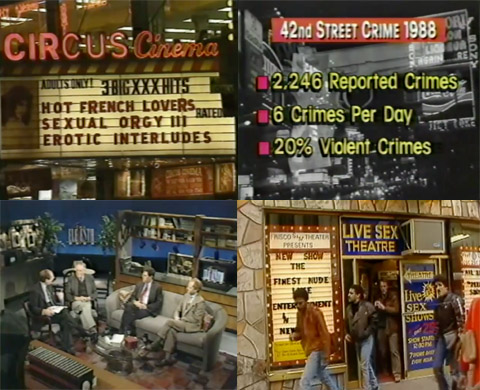
NYC, 1981 is nominated for a Webby.
I wrote a couple pieces for the site:
"The Rise and Fall of the King of Swing," non-fiction:
"For $35, suburban couples could swap sex partners with hundreds of other likeminded individuals, join the orgy in the 'mattress room,' swim in a pool with a waterfall, soak in an enormous Jacuzzi, feast on an expansive buffet (the selection included chow mein, potato salad, and cold cuts), screw strangers in private rooms, or dance naked to disco music."
and "Sex and the City, 1981," fiction:
"I end up at Show World, and I hand the guy my cash, and I get in the booth, and the curtain slides up, and there’s a girl dancing on a pedestal in the middle of the round room, and she’s totally naked."
Buy THE TUMOR: "This is one of the weirdest, smartest, most disturbing things you will read this year."
Did You Buy The Tumor?
If you bought a copy of THE TUMOR -- my awesome new short story featuring terror, hilarity, and an anthropomorphized malignancy -- I'm interested in hearing from you. This Friday will mark 30 days since I launched the project, and I'll be writing a post on how it's gone thus far -- focusing particularly on how many copies I sold, total revenue, and how Pay Want You Want pricing worked in this case. I'm most interested in this last -- PWYW -- and if you bought a copy, I'd love to hear how it impacted your purchase. How much did you pay ($1 was the minimum)? If you paid more than $1, why? Why did you pay the amount that you paid? I'm just curious to learn more about this process and how people calculate the value of something when you let customers decide the price.
Email me here!
Buy THE TUMOR: "This is one of the weirdest, smartest, most disturbing things you will read this year."
Thoughts on Interstellar
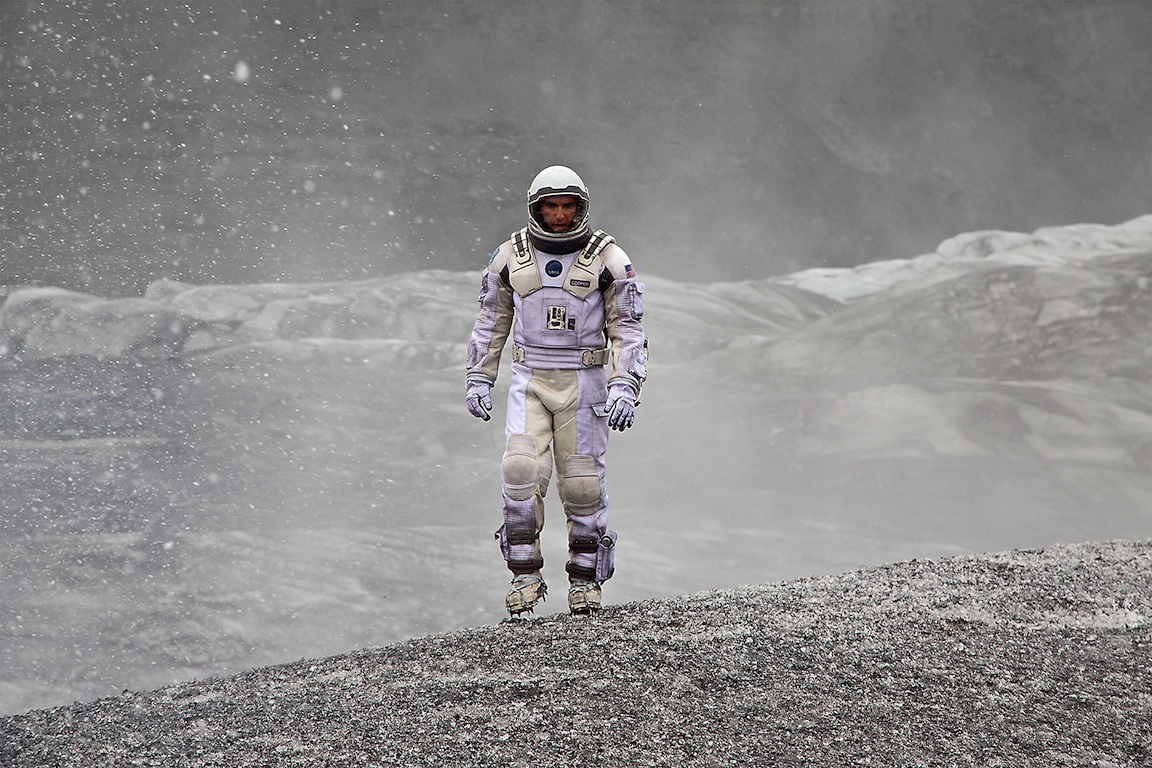
I can't say I have much to say about "Interstellar" because, I mean, you know, who the hell understood it?, but I will say a few things generally. The robot was great. At first, I was like, what the hell? That is the stupidest, most archaic design idea for a robot I've ever seen, but then it started speaking warmly, and I realized I was in love. I also loved the fact that these robots were willing to lie down if you need them to do so, and they would run across a field of water and reconfigure themselves into a hero for you. Those are the best kind of robots. I also really loved the part about the bookshelf. For me, there was this idea embedded in it that books are the most important things in the world, and that books are how you communicate with the past, and the present, and the future, and that in the end, you can make all your fancy science projects, but it is books that will save us. I found Anne Hathaway annoying. There's just something annoying about her face. It's like she knows everyone finds her annoying, so she mirrors that annoyance back at you.
Buy THE TUMOR: "This is one of the weirdest, smartest, most disturbing things you will read this year."
Dear Susannah: How Can I Repay You?
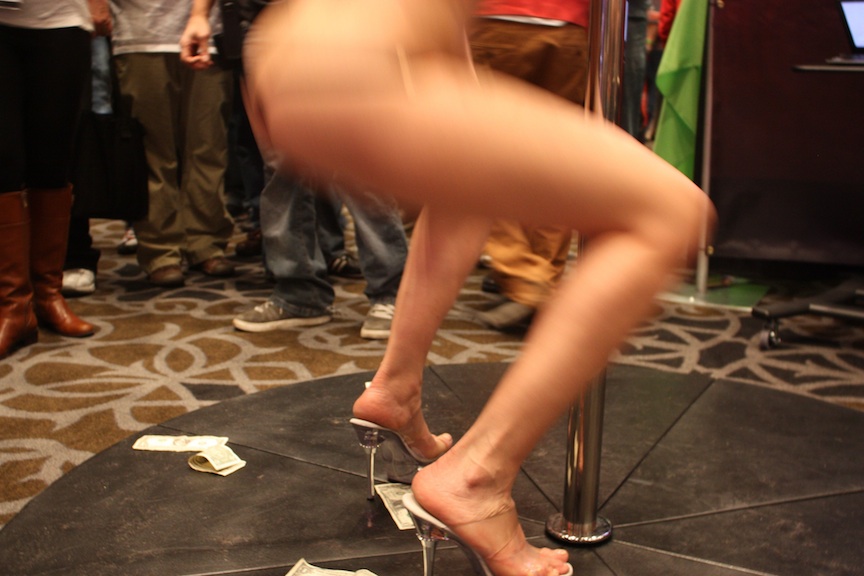
Stripper, Las Vegas, NV / Photo credit: Susannah Breslin
Name: [redacted]
Email: [redacted]
Subject: Money
Message: You and your words have impacted my life in many ways over the years, some good, some well that was my own fault really. I feel I owe you something for all your words, ideas and culture you have lead me too.
I can walk into a book store and buy a book $20 to 40 -ish AUS and somewhat support the author but I come here and I can't give you money? Maybe I will only browse for a while but maybe, distraught, drunk, happy, amused... and maybe many other like me will just give you money for being you? Call it Patronage, Matronage give us some price points or even a feeling lucky button and we could put some money into your bank account. Strange things happen but you know this better than I.
Thanks again
[redacted]
Thanks for reading my work. Like many others, you have spent years reading my blog, my Forbes blog, and my journalism for free. How can you repay me? Buy a copy of THE TUMOR. The Pay What You Want pricing option gives you the ability to pay whatever you want for it. It's a way of letting creators know you support their work.
Buy THE TUMOR: "This is one of the weirdest, smartest, most disturbing things you will read this year."
Why You Still Shouldn't Be a Writer
It's hard to pick just one when I consider which one of my screeds is the most hated, but "Why You Shouldn't Be a Writer" is the likely winner. ("Trigger Warning: This Blog Post May Freak You the Fuck Out" is a close second.)

I wrote WYSBAW in 2012 on my Forbes blog. To date, it has close to 300,000 views and 356 comments. (My guess is that it's the most-commented-on post I wrote at Forbes, but I no longer have access to the back end data that I think would clear that up for me.)
The post is only 626 words, and my guess is I spent less than an hour writing it. It consists of an introduction ("I’m going to be a writer, you decide one day, sitting on the crapper," a paragraph begins) and three "tips" ("You're Not Good at It" is the first).
"But here’s the question you should be asking yourself: Can I write? Not literally. Not physically. Not technically. Anyone can do that. Can you make the words sing? Does your prose have that certain something? Are you gifted at showing not telling, or telling not showing, or creating an entire world that didn’t exist before that is born again when someone else reads your work?"
I get hate email from the post on a regular basis -- perhaps a couple a week. These aspiring writers/WYSBAW haters find me standing in line at the grocery store, having just woken up, in the middle of writing. Mostly, they are the same: poorly written, illiterately defiant, stridently outraged. I'm going to show you! they squawk in jumbled prose riddled with spelling errors. I'm going to be a writer anyway! Good luck on that, I think, and then click delete.
There is no saving the self-deluded.
The post resurfaced in my mind lately because of Ryan Boudinot's "Things I Can Say About MFA Writing Programs Now That I No Longer Teach in One." In it, he lines up writers, MFA programs, and shitty writing and smashes them all off the table with one fell swoop of his arm. "Writers Are Born with Talent," he dares to assert. And for confessing this truth, he is pilloried.
In a response piece on Electric Literature, written by someone who was so cowardly they couldn't even share their name, gets at the why behind the outrage:
"For some reason it has become taboo to suggest that people might not be able to do whatever it is they set their mind to. A diet of inspirational narratives in which all it takes is a dream and a montage to reach your loftiest ambitions has clouded common sense. We’ve managed to confuse the fact that a good writer could be anyone with the idea that anyone could be a good writer."
And, indeed, in all likelihood, you are not a good writer. Because most of us aren't. I've started going to the gym several times a week. This doesn't make me an Olympic athlete. Next week, I'm starting an improv class, and I'm not very good at improv because I'm physically stiff and in a book that was written about a TV show that I used to be on I am classified as "awkward," which is basically objective proof of how not good at physical "acting" I am. I take care of the dog, but I feel that something is lacking in my canine caretaking because I am not a dog person, I am a cat person. There is no shame in not being good at something. The shame is when you think you are good at something, and you are not. Like writing.
There is nothing to be gained by encouraging poor writers to consider themselves writers. It is far more charitable to suggest they look around themselves and pick up something else. Like needlepoint, golf, the tango. Let's face it, you want to tell them, you were not born to be a writer. It is highly unlikely that you will become a writer. So admit that, get on with it, and figure out what you do well, because that will be the gift that you give the world. Not your poorly written prose.
I'll close with a recent comment that went up on WYSBAW:
"This post is delicious; and as someone who gave up his other career only to write (been writing a novel for two years, working every single day on it), I believe this piece only means to caution. Writing is a difficult and lonely job, which, unlike heart-surgery, a lot of people tend to think is easy, primarily because, unlike heart-surgeons, everyone who ever went to a school was taught elementary writing in some language. Advising caution in a world where publishing has been ‘democratised’ and a large percentage of literate people think they can write something of true value to the reader (in such a way that there may soon be more writers than readers) is the sole point of this piece. That, it seems to make well. The opinion that this piece may demoralise the person who would otherwise go on to write the next Hundred years of Solitude or Tin Drum (substitute your favourite books here) has little merit; Márquez or Grass wouldn’t give up writing if they had read this when young."
Buy THE TUMOR: "This is one of the weirdest, smartest, most disturbing things you will read this year."
I Joined a Writing Group. You'll Never Believe What Happened Next.
A few weeks ago, someone mentioned a local writing group. I haven't been in a writing group in years. Not even a virtual one. The last time I "workshopped," as they say, a piece of fiction, I was in grad school. Still, I thought, why not try it? So, I did. Here's why writing groups aren't the worst thing ever.
They Change Your Writing Routine
Is joining a writing group writing? Well, not really. Not technically. Here's what writing is: staring at a computer screen and trying not to chop off your head. Writing groups change that dynamic. I found myself in a room with other human beings talking about writing. This hardly ever happens to me. It reminded me that writing isn't just coughing up words, but also talking about words.
Any Feedback Is Good Feedback
Well, not really! As far as grad school, there's always at least one pretentious asshole who is commenting on your work as a way to telegraph their knowledge about something obscure, complex, and polysyllabic. One thing I liked about my writing group experience is that the same sentences in my fiction I'd felt were sort of off, they thought were sort of off, too. One could say, duh, or one could learn that one should trust one's instincts more when writing.
Freaks Dig Freaks
I had the same feeling in this writing group as I did when I went to speak at the Crossroads
Writers Conference in Macon, GA, a few years ago. Writers talk different. They talk in unnecessarily garbled ways about things other people don't care about. It's nice to be on the same planet as people who speak your language.
Get the Message
I think most writers suffer from some level of Imposter Syndrome. Are you a writer if every publication you submit to rejects you? Are you a writer if you haven't written yet today? Are you a writer if someone tells you that you're an awful writer? It doesn't matter if other people in your writing group think your work sucks or think it's great. They're still telling you that you're a writer. And that's good to remember. Especially when you feel like you aren't.
Readers Think of Stuff Your Dumb Ass Didn't
I submitted THE TUMOR for their consideration. They had interesting ideas about what was in the story and, more importantly, what wasn't in the story. It's hard to say without spoilers (so buy a copy), but, suffice to say, they wanted to know: what was she thinking? and what happened when he faltered? and what if they had done that horrifying thing at the end, then what? That's the kind of shit that expands your creative range and, you hope, stretches you when you sit down again in front of that goddamn blank white glowing screen.
Buy THE TUMOR: "This is one of the weirdest, smartest, most disturbing things you will read this year."
A Partial List of Publications That Have Rejected My Fiction in Recent Years
If you want to know why I decided to self-publish THE TUMOR, here are a few good reasons. A sampling of rejections of various short stories I submitted in recent years to publications ranging from the well-known to the deeply shitty. I can't even believe I submitted to some of these places. In fact, I can't believe I submitted to any of these places. Reasons for their decline are mostly generic, but my favorite is: "I think it's a little too graphic for us to run." Fanfuckingtastic. As Groucho Marx famously said: "PLEASE ACCEPT MY RESIGNATION. I DON'T WANT TO BELONG TO ANY CLUB THAT WILL ACCEPT PEOPLE LIKE ME AS A MEMBER." Support my work so I don't have continue getting rejected by these fucking morons, and you can enjoy reading awesome work like THE TUMOR, which you can buy online HERE today.
American Short Fiction: "We read your submission carefully and regret that we are unable to use it at this time. While the volume of submissions prevents us from responding specifically to your work, we wish you the best of luck in placing it elsewhere."
New England Review: "Thank you for giving us the chance to read [redacted]. While in the end we have decided against publishing this piece in the New England Review, we thought the writing had merit, and we wish you the best in placing it elsewhere."
Boulevard: "Thank you very much for sending [redacted] to Boulevard. We're sorry for taking such a long time with your work. Although it doesn't fill our editorial needs at the moment, we're glad you thought of us. Good luck placing this with another magazine."
Tin House: "Thank you for sending us [redacted]. Thank you, also, for your patience in waiting to hear back from us. Unfortunately, we must pass at this time. Best of luck placing your work elsewhere."
McSweeney's: "Thank you for sending us [redacted]. We rely on submissions like yours, since a good portion of what we publish comes to us unsolicited. Unfortunately, we can't find a place for this piece in our next few issues. But please feel free to submit again in the future. Our tastes and needs continuously change. Thanks again for your efforts, and for letting us see your work."
Guernica: "Thank you for submitting your short story to Guernica Magazine. It wasn't quite right for us, but we hope you will be able to place it elsewhere, and that you keep us in mind in the future. (If you do submit again, please do so in a new email thread: a reply to this message will get misfiled.)"
BOMB: "Thank you for your interest in BOMB Magazine. We appreciate your submission but regret to inform you that it does not meet our editorial needs at this time. We wish you luck placing your manuscript elsewhere. "
Metazen: "Thank you for letting us have a look at your work. While I've decided to pass on this one, I wish you much success in placing it elsewhere."
Failbetter: "Thanks for sharing your work with failbetter.com. We're sorry to report that it's not quite right for our site. We apologize for the delay in responding, and wish you the best of luck in placing it elsewhere."
The Toast: "I think it's a little too graphic for us to run, but thanks for letting us have a look! We're always open to pitches."
Digital Americana Magazine: "Thank you for submitting your work to us for the Fall 2013 issue. We appreciate the chance to read it. Unfortunately, we were not able to find a place for your piece in this issue. Thanks again. Best of luck with future submissions."
Juked: "Thank you for sending us your work. We appreciated the read, but we're sorry to say we are unable to use this submission. We wish you the best on finding a good home for this piece."
Birkensnake: "Thank you for letting us see [redacted]. We're going to pass on it, but we enjoyed it more than is usual, and we look forward to reading more of your work one day."
High Desert Journal: "Thank you for sending us [redacted]. We appreciate the chance to read it. Unfortunately, the piece is not for us."
AGNI: "Thank you for sending [redacted]. Your work received careful consideration here. We've decided this manuscript isn't right for us, but we wish you luck placing it elsewhere."
The Threepenny Review: "We have read your submission, and unfortunately we are not able to use it in The Threepenny Review. Please do not take this as a comment on the quality of your writing; we receive so many submissions that we are able to accept only a small fraction of them."
Buy THE TUMOR: "This is one of the weirdest, smartest, most disturbing things you will read this year."
What I'm Writing

Buy THE TUMOR: "This is one of the weirdest, smartest, most disturbing things you will read this year."
This Is Happiness

Thanks to This Isn't Happiness, who posted a link to THE TUMOR last Friday, I sold 34 copies of THE TUMOR over the weekend.
Fun facts:
Of those sales, the average sale price (I use Pay What You Want pricing) was: $4.48.
The cover of THE TUMOR was designed by Peteski, who runs This Isn't Happiness.
This weekend customers were 76% male, 18% female, and 6% unknown.
Buy THE TUMOR: "This is one of the weirdest, smartest, most disturbing things you will read this year."