Breaker Beauties (1977)
A poster for “Breaker Beauties” at a sidewalk sale. Follow me on Instagram for more photos from my life in L.A.
Buy My Book I About | Blog I Newsletter I X I Instagram I LinkedIn I Hire Me I Email

A poster for “Breaker Beauties” at a sidewalk sale. Follow me on Instagram for more photos from my life in L.A.
Buy My Book I About | Blog I Newsletter I X I Instagram I LinkedIn I Hire Me I Email

Porn star Jesse Jane, Las Vegas, NV | Photo credit: Susannah Breslin
“Where do porn stars go when they die? I don’t know, but I hope it’s heaven—or something like it.” Read the rest of my latest Reverse Cowgirl newsletter and subscribe: “They (Still) Shoot Porn Stars, Don’t They?”
Buy My Book I About | Blog I Newsletter I X I Instagram I LinkedIn I Hire Me I Email
Daily Blast Live interviewed me about my memoir, Data Baby: My Life in a Psychological Experiment. Watch.
Buy My Book I About | Blog I Newsletter I X I Instagram I LinkedIn I Hire me I Email

A Memphis strip club employee counts money, Memphis, TN | Photo credit: Susannah Breslin
This is part 5 of “Fuck You, Pay Me,” an ongoing series of posts on writing, editing, and publishing.
There’s been a lot of talk lately about the death of journalism. Reporters are being laid off. Journalists are out of work. I’ve been a writer for over 20 years. Throughout, I’ve been able to sustain my writing career by diversifying my talents. Here are some of the ways that I’ve made money by using my writer skills.
Copywriter. As I have written on this blog, I got paid $100 an hour pretending to be the personality of Pepto-Bismol on social media. This was a fun job. Sometimes I wish that I could do it again. According to my notes: “social media engagement [increased] by 500% and market share [grew] by 11%” during the time period in which I was pretending to be Pepto.
Journalist. Reporter. Journalist. Investigative whatever you want to call it. I’ve done pretty much every type of journalism there is. People say journalism dying. Maybe they’re right, but I doubt it. I’m probably best known for “They Shoot Porn Stars, Don’t They?,” an investigation of the Great Recession’s impact on the adult film industry. My reporting has been described as “unflinching and devastating.”
Author. Last year, I published a memoir: Data Baby: My Life in a Psychological Experiment. Twenty years earlier, I published a short story collection: You’re a Bad Man, Aren’t You? I got an advance for the former; I didn’t get an advance for the latter. Books are a long game hustle. They may pay more money, but they may cost you a great deal of time.
Editor. I’ve been an editor for from Forbes.com, where I was the founding editor of the Vices section, and The Frisky, a site for women that was owned by Turner. These roles involved interfacing with other writers and editing their work, so if you’re incapable of those things, don’t be an editor. These days, sometimes someone who has an “editor” title is really just a writer; why this is, I have no idea.
Publicist. One of my first jobs after graduate school was doing PR for a book publisher. Being a publicist is a tough job because you do a lot of pitching, and oftentimes your pitches are ignored or declined. But being a publicist is one of the most important jobs I’ve ever had because I learned how to publicize myself. That skill came in handy when my memoir came out, and I worked hard to promote it.
Traffic driver. I’m not sure what to call this gig, even though I’ve done it for big companies. Organizations hire me to drive traffic to their digital platforms. I’ve found I obtain the best results when I function as both an editor and / or content creator in addition to driving traffic. For example, when I was at The Frisky, I grew the site from startup to 4M+ unique visitors and 22M+ page views a month.
Consultant. My consulting work as The Fixer is my highest-paid work. Typically my client is a CEO / founder / venture capitalist. They have a problem, and they hire me to fix it. This covers a range of issues, from getting media coverage to assisting in business development to strategic growth. Truth be told, I am better at this than anything else and have added millions of dollars to clients’ portfolios.
Essayist. I wrote “I Spent My Childhood as a Guinea Pig for Science. It Was … Great?” — on spec. I avoid writing on spec, because it sucks, but I knew the essay would help me promote my memoir. Once I was done, I shopped the essay around to a dozen outlets. Two were interested. I went back and forth on contract terms with the first, and we were unable to resolve them. The essay ended up at Slate, where I had a great editor, it got an excellent title, and I was happy.
Fiction writer. I write short stories, and I have had many of them published. I was paid for some of the short stories that were published, and I was not paid for others. Currently, I’m writing a novel that is set in the San Fernando Valley’s adult film industry, and I’m really excited about that.
Screenwriter / Producer. I’ve done some writing and producing for TV. This includes developing documentary and scripted TV series, including true crime, outdoor adventure, and miniseries. I was also a consultant for a movie directed by an Oscar-winning director. The TV business is not for the faint of heart. If you’re writing your own TV or movie project, please register it with the WGA.
Fellow. From 2018 to 2019, I was the Lawrence Grauman Jr. Post-graduate Fellow at the Investigative Reporting Program at the Graduate School of Journalism at U.C. Berkeley. This was a salaried role with benefits. At the time, the IRP’s leadership was in flux, but that has since changed for the better. I used my time as a fellow there to work on my memoir, which includes investigative reporting.
Teacher. When I was in grad school, I had a fellowship. My tuition was waived, I received a stipend, and I taught one undergraduate course per semester. I taught freshman composition and writing the research paper. After I graduated, I taught at various community colleges around the Bay Area (aka a gypsy scholar). Sometimes I think about getting my doctorate but haven’t decided yet.
Photographer. Over the course of my career, I have had some of my photos published in media outlets. These include Men’s Health, Forbes.com, Le Journale de la Photographie, mashKULTURE, Nerve, and Arthur. I can’t recall if I was paid for any of these photos, but I do enjoy taking pictures.
Ghost. I’ve been a ghostwriter in various incarnations, from ghostwriting tweets for celebrities to ghostwriting speeches for CEOs. I haven’t ghostwritten a book, although I imagine at some point I will. Everyone wants to be an author nowadays. They just don’t want to write the book. Recently, I enjoyed reading a story about a ghostwriter conference: “Ghostwriters Emerge From the Shadows.”
Blogger. I started blogging in 2002. I had a very popular blog called The Reverse Cowgirl. It was one of the internet’s first sex blogs. In 2008, Time.com named it one of the best blogs of the year. These days The Reverse Cowgirl is the name of my Substack newsletter, which I plan to monetize.
Project-er. I create independent projects. The Letters Project series was conducted over five years. I shared anonymous letters sent to me from johns, working girls, strip club patrons, cheaters, and porn-watchers. These projects were covered by Salon, Newsweek, and CBC Radio, among other outlets.
Talker. I’ve been a speaker on various panels, presented my work at conferences, and read my writing at literary events. Some of these events have been paid; some of them have not. Quite a few of them have connected me with other writers, and that experience has been invaluable.
Seller. This is a sector to which I hope to devote more attention moving forward. I have a Gumroad store where I sell a short story that I self-published, signed copies of my memoir, and my consulting services. Gumroad is a very simple, easy platform to use, and I highly recommend it.
On camera reporter. Years ago, I was an on camera reporter for Playboy TV’s “Sexcetera.” I did this gig for five years, I got paid well for my time, and I traveled the world. I saw very wild things, and I wrote some of my own scripts, and I got to visit the Playboy Mansion three times. Being on camera taught me a lot about myself. It also boosted my confidence. And for that I have Hef to thank.
Buy My Book I About | Blog I Newsletter I X I Instagram I LinkedIn I Hire me I Email

Zibby Owens interviewed me about my new memoir, Data Baby: My Life in a Psychological Experiment, for her Moms Don’t Have Time to Read podcast. You can listen to the episode here: “Susannah Breslin, DATA BABY.”
Buy My Book I About | Blog I Newsletter I X I Instagram I LinkedIn I Hire Me I Email


Now that my memoir is out in the world, I’m consulting again. What do I do as The Fixer? Well, it’s a little bit of everything. Strategy consulting is one way of putting it. Consigliere is a bit more accurate. As a consultant, my work ranges from crisis communications to M&A to executive coaching to PR. Book your (deeply discounted) introductory session with me today here. If you’ve got a problem, I can probably fix it.
Buy My Book I About | Blog I Newsletter I X I Instagram I LinkedIn I Hire Me I Email

Porn awards, Las Vegas, NV | Photo credit: Susannah Breslin
Currently, I’m writing a novel that takes place in the San Fernando Valley and is set in the adult movie industry. In this post, I’ll keep an ongoing record of the specific song that I was listening to that is most representative of each chapter. Check back on this post in the future for more updates as I write.
Without further ado …
Song: “Beat the Devil’s Tattoo”
Artist: Black Rebel Motorcycle Club
Genre: Dark psychedelic rock
Representative lyric: “Open up your eyelids and let your demons run”
Vibe: The grind
Song: “I Feel Love (Afrojack Remix)”
Artist: Donna Summer
Genre: Electronic disco
Representative lyric: “Ooh, fallin' free, fallin' free”
Vibe: Creepin’
Song: “Whatever”
Band: Godsmack
Genre: Post-grunge
Representative lyric: “I'm doin' the best I ever did”
Vibe: Malignant flaneur
Buy My Book I About | Blog I Newsletter I X I Instagram I LinkedIn I Hire Me I Email

This is part 4 of “Fuck You, Pay Me,” an ongoing series of posts on writing, editing, and publishing.
I want to say the first memoir I read was Silvia Plath’s The Bell Jar, which, of course, is not a memoir at all but a novel. I want to say my favorite memoir is Marguerite Duras’ The Lover, which is maybe true and maybe not. I want to say my memoir, Data Baby: My Life in a Psychological Experiment, is not a memoir but a literary interrogation, and that might be right.
My general feeling about memoirs is that I do not like them. The memoirs of which I am thinking are written by women for women, are not concerned with the world at large but with the world of the interior (as if women have nothing to say about the world and must relegate themselves to writing about their interiors), are books of feelings that occupy a literary pink ghetto created by the publishing business that limits women to a silo of what is acceptable to write about and does so in order to mass produce books, regardless of what these books do or do not say or how they say it.
When people ask me for examples of the kind of memoirs I am talking about when I say I don’t like memoirs, I might say Eat, Pray, Love by Elizabeth Gilbert or Untamed by Glennon Doyle. I’d like to believe these types of memoirs are on their way out, because surely women readers are getting exhausted from reading stories about women who go on personal journeys of great discovery that just so happen to take place in neat three-act structures and mostly have happy endings. The thing I dislike most about these sorts of memoirs is that they start from a shared premise. A woman is a broken thing. A woman is a thing that must be fixed. A woman must become some thing other than who she is in order to be happy. This the same lie the beauty industry sells: You, a woman, are not, are never enough.
Obviously, there are memoirs that do not follow these limiting definitions of what a memoir is. To name a few: The Woman Warrior by Maxine Hong Kingston (who surely influenced me as one of my professors at U.C. Berkeley), In the Dream House by Carmen Maria Machado, Constructing a Nervous System by Margo Jefferson. As Megan O’Grady writes astutely in “These Literary Memoirs Take a Different Tack”: “Memory is also identity, and for those historically cast to the margins of our national stories, or those who grew up as the silent daughters or queer kids at the family dinner table, seizing control of one’s narrative has a particular power.” To write within the confines of someone else’s definitions of writing is to disappear oneself.
Memoirs are very popular these days. Prince Harry’s Spare was one of the best-selling books of 2023. Britney Spears’ The Woman in Me has sold over 2 million copies. Matthew Perry’s Friends, Lovers, and the Big Terrible Thing was an “INSTANT #1 NEW YORK TIMES BESTSELLER” and a “#1 INTERNATIONAL BESTSELLER.” Did these celebrities write these books on their own? Regardless of what they may or may not say or have said, that is probably not very likely. In “Notes From Prince Harry’s Ghostwriter,” J. R. Moehringer shares that “memoir isn’t about you. It’s not even the story of your life. It’s a story carved from your life, a particular series of events chosen because they have the greatest resonance for the widest range of people.” He is not lying.
As I have written in this series previously, I sold my book to one of the Big Five publishers on proposal, and it was stipulated in the contract that I would write it as a memoir. I had not pitched the book I imagined I would write as a memoir but as a book that would interweave memoir, narrative nonfiction, and investigative reporting. I have a history, professionally speaking, of coloring outside of the lines, and I envisioned I would do the same thing with my book. Why be one thing when you can be, say, three? After all, what I was proposing wasn’t so, well, novel. Kingston’s memoir had been published in 1976. Didn’t the world want something … original?

Apparently not. The publishing industrial complex had other concerns. A way to market the book that was simple, obvious. A mode by which my book could be lumped in with other books that were supposedly like it. A formula by which the all-seeing-but-never-seen algorithm would sell a book-shaped product with my name on it. This was smoke and mirrors, a game of charades, a grim routine of The Hokey Pokey. I had worked in publicity and marketing but I could not see the sense in the squandering of an opportunity for a unique value proposition. Yet I had already signed on the dotted line. And what did I know? I wasn’t a publisher or a bookseller. I was a writer.
Generally speaking, I don’t like being told what to do. I find it constraining, like a personal violation. Because that is what it is. At a certain point in my writing career, when people younger than me asked me why I became a writer, I started saying: Because it is the only thing I do well. So to have my writing restricted, limited, or dictated in such a way—let’s be honest: in any way—was like being on a leash and the leash was tied to a stake and I kept spinning around until I was wholly tangled up in the lead. Ultimately, I wrote about some of these very issues in my book, and I would argue the book is not a memoir at all but a literary interrogation pretending to be a memoir to interrogate memoir itself, but I guess that’s for the reader to decide.
Recently I thought about some of these ideas as I read a review of my memoir in The Columbia Journal of Literary Criticism written by Surina Venkat. “Her memoir, a reordering of her eventful life, constructs a narrative of her own design — one with handpicked data points and where the data points are memory, resisting the depersonalizing role of the ‘studied’ that Breslin occupied for decades of her life,” Venkat observes insightfully. “Susannah Breslin was indeed a data baby — twice, even. And her second time, she flaunts the role, resisting its implications and asserting her own control over it.” The only way I could tell the curious story of my life was by wresting the narrative from others: my parents, my publisher, my own preconceived notions of what a memoir should or should not be. By seizing authorship, I assumed the role of author, which, per Merriam-Webster, does not conform to deal terms but is “one that originates or creates something.” And that, to put it frankly, is the entire fucking point.
Buy My Book I About | Blog I Newsletter I X I Instagram I LinkedIn I Hire Me I Email

The dedication for my memoir, Data Baby: My Life in a Psychological Experiment, got a shout out on X from @dedication_bot. A few other cool dedications from the account, which posts book dedications every four hours: “A Demon's Guide to Wooing a Witch by Sarah Hawley,” “The Treeline: The Last Forest and the Future of Life on Earth by Ben Rawlence,” and “Alone with You in the Ether: A Love Story by Olivie Blake.”
Buy My Book I About | Blog I Newsletter I X I Instagram I LinkedIn I Hire Me I Email

When I’m not anxious, I’m depressed. Why am I anxious and depressed? Find out more about my particular brand of crazy and its roots in this interview I did with Anxious Dude: “I Am Anxious… Susannah Breslin.”
Buy My Book I About | Blog I Newsletter I X I Instagram I LinkedIn I Hire Me I Email

“Susannah Breslin was indeed a data baby — twice, even. And her second time, she flaunts the role, resisting its implications and asserting her own control over it.” Read the rest of this insightful review of my memoir, Data Baby: My Life in a Psychological Experiment, in The Columbia Journal of Literary Criticism.
Buy My Book I About | Blog I Newsletter I X I Instagram I LinkedIn I HIre Me I Email

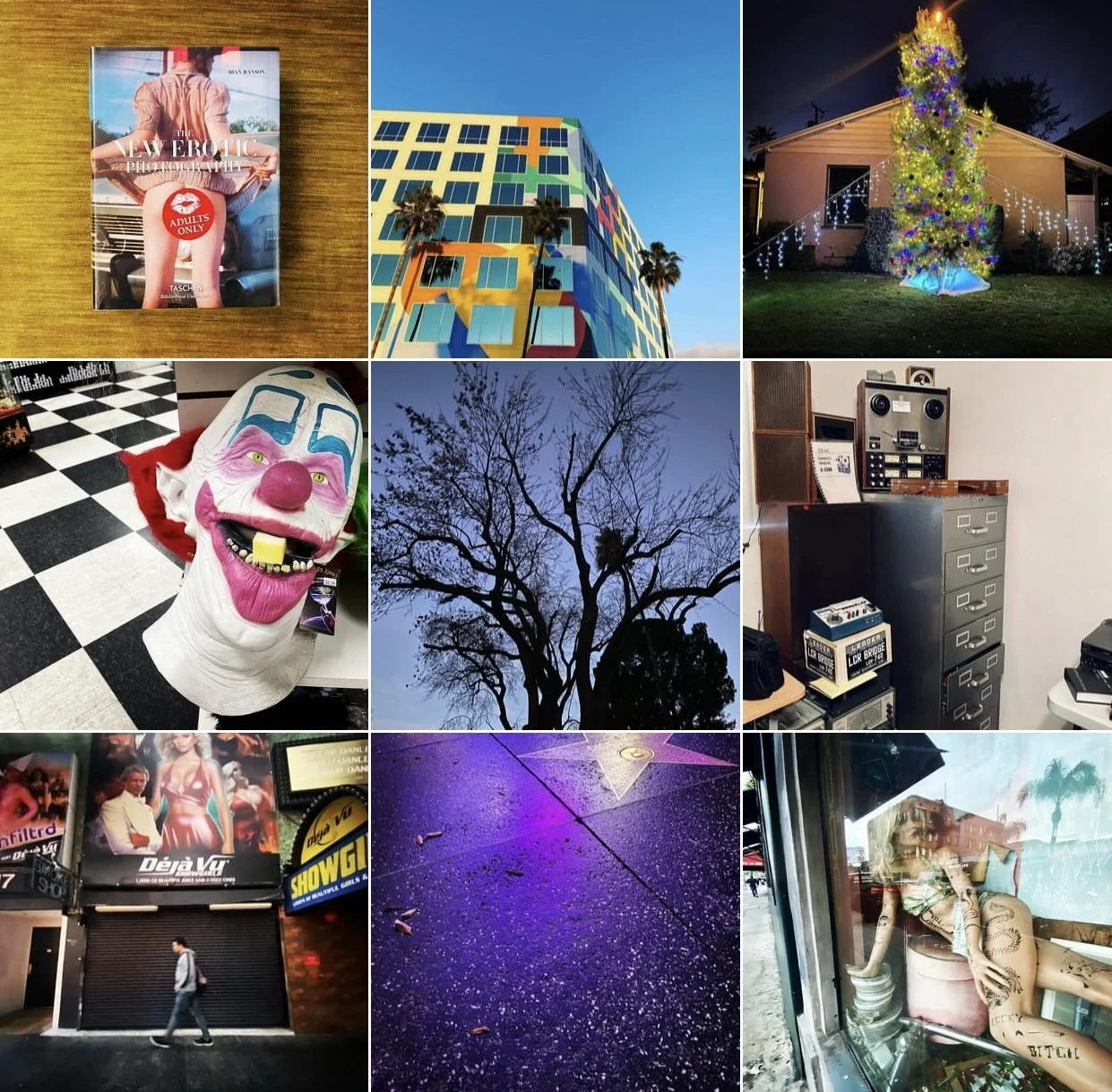
A clown mask at Blast From the Past. Follow me on Instagram for more photographs from my life in L.A.
Buy My Book I About | Blog I Newsletter I X I Instagram I LinkedIn I Hire Me I Email

“In Data Baby, Breslin reflects on her experiences: How much of her present was predicted by her past? How much of her future has been pre-ordained? How much has all of ours?” Read Five Books’ recommendation of Data Baby: My Life in a Psychological Experiment in “Notable Psychology and Self-Help Books of 2023.”
Buy My Book I About | Blog I Newsletter I X I Instagram I LinkedIn I Hire Me I Email

Vintage tech at a Valley Village estate sale. Follow me on Instagram for more photos from my life in L.A.
Buy My Book I About | Blog I Newsletter I X I Instagram I LinkedIn I Hire Me I Email

“If, as Socrates contended, ‘the unexamined life is not worth living,’ then Breslin is living hers to the fullest. Lucky for us, she’s written a thought-provoking, ridiculously propulsive book about it.” Read the rest of this excellent review of my memoir, Data Baby: My Life in a Psychological Experiment, in The Globe and Mail.
Buy My Book I About | Blog I Newsletter I X I Instagram I LinkedIn I Hire Me I Email

This is part 3 of “Fuck You, Pay Me,” an ongoing series of posts on writing, editing, and publishing.
I’ve been working on what I refer to as my porn novel, and it’s been going pretty well. I thought I’d share a few things I’ve learned so far. If the novel keeps moving forward, there will be more posts like this to come. By the way, my novel isn’t porn, or smut, or romance. It’s literary. I call it my porn novel for the sake of shorthand.
Do the math. There is nothing more daunting than writing a novel, so sometimes when I get overwhelmed, or stuck, or unsure, I quantify something that seems unquantifiable. You know, like a novel. So pretty early, I converted the project into numbers. The novel would be approximately 60,000 words long. It would consist of 12 chapters. Each chapter would be approximately 5,000 words long. Each chapter would consist of 10 sections. Each section would be approximately 500 words long. In this way, when I sit down to write, I’m writing another 500-word section of my novel, not attempting to write a novel that is 60,000-words long. Capiche?
Do it your way. Last year, I went to an estate sale at a Hollywood art gallery. Some of what was being sold was vintage adult movie posters. I bought a poster for a porn movie called “She Did It Her Way.” In case you can’t read between the lines, I did not feel while writing a memoir while under contract to a major publisher that I was doing it my way, so in a way the writing of this novel is an effort to go back to what I used to do, which is to write what I want to write how I want to write it, not write what I think someone else wants me to write because that is what I feel I am contractually obligated to do. This novel is all about doing it my way. The other way is bullshit.
Do weird shit. This novel is weird. I mean it’s written in English, but it certainly is very different. I don’t think it has any obvious comparisons in the world of novels, so I guess you could say it is quite original. Also, it has really weird stuff in it, like weird dreams, and a weird main character, and a weird kind of relentless focus on the life of a person in extreme detail to the point of being a little “Jeanne Dielman, 23 quai du Commerce, 1080 Bruxelles”-esque. Do you know how many new books are published every year? I don’t either. But a lot. Secret: Most of them are garbage. Garbage or not, the only way to stand out from the crowd is to be weird.
Don’t overthink it. One thing I’m having a fair amount of success with in regards to this novel is not overthinking it. In fact, I don’t even think about it that much when I’m not working on it. I bang out these 500-word sections in about an hour, and I try not to do more than one of them a day. I allowed myself to create a draft of the first chapter that was a little messy but not overly so, and I paid a lot of attention to not dwelling on it, not sitting at the computer for a long period of time, and not spending hours of my life wondering whether or not it’s any good. I mean, it’s about the porn industry. How bad could it be? Ha-ha.
Don’t over revise. When I was done drafting the first chapter, which, I don’t know was done over the course of maybe a couple of weeks or a month or something, who knows, I can’t remember anymore, but not super long, I set it aside for a little bit. Then I decided I would go back and revise the first chapter. Revising my memoir was a bit of a nightmare, for reasons you may or may not be able to intuit, and I wasn’t sure when I went to revise this first chapter of my porn novel if that would be a nightmare, too. Thankfully, it wasn’t. I identified the issues pretty quickly and resolved them relatively easily. There are some things that need to be figured out and tweaked that have to do with the overall unspooling of the book, but I don’t think it will be some massive reinvention of the text. The only part I struggled a bit with was the last section of the first chapter. I’m not sure why. I’ll figure it out later.
Don’t stop trying. Awhile back, I wrote this post about the story of my life as a writer, and I realized as I was writing it how impactful certain events had been. Not obvious life shit, but writer shit. Like the writing residency I did in upstate New York, and the fellowship I did at U.C. Berkeley, and the seminar I did in a Philip Johnson building in Manhattan. And as I was writing the post, I recalled very clearly that for every single one of those things I applied for I was very cognizant of the fact that I didn’t think I was going to get it. But then I did. So I thought, you know, I should apply for some writing residencies for my porn novel. And then I thought, Oh, no, they’ll never pick me because this novel is literary but it is also about porn, and sometimes porn makes people twitchy. Anyway, I applied to one and more to come. Because you gotta try.
Decide to be transparent. If you have any awareness of me and my writing, you’ll know that I’ve tried to write this porn novel many times before, although always in different ways. This way feels different. I debated whether or not to share how it’s going at all, seeing as maybe I’ll just fail at it again, like all those other times. But then I thought, Fuck it. Who cares. One great thing about blogging is no one ever reads blogs anyway. This will be me, writing for me, about me. It will stand as a record of the point where I was now, and maybe at some point in the not-so-distant future I’ll look back on this and think: You go, girl.
Buy My Book I About | Blog I Newsletter I X I Instagram I LinkedIn I Hire Me I Email
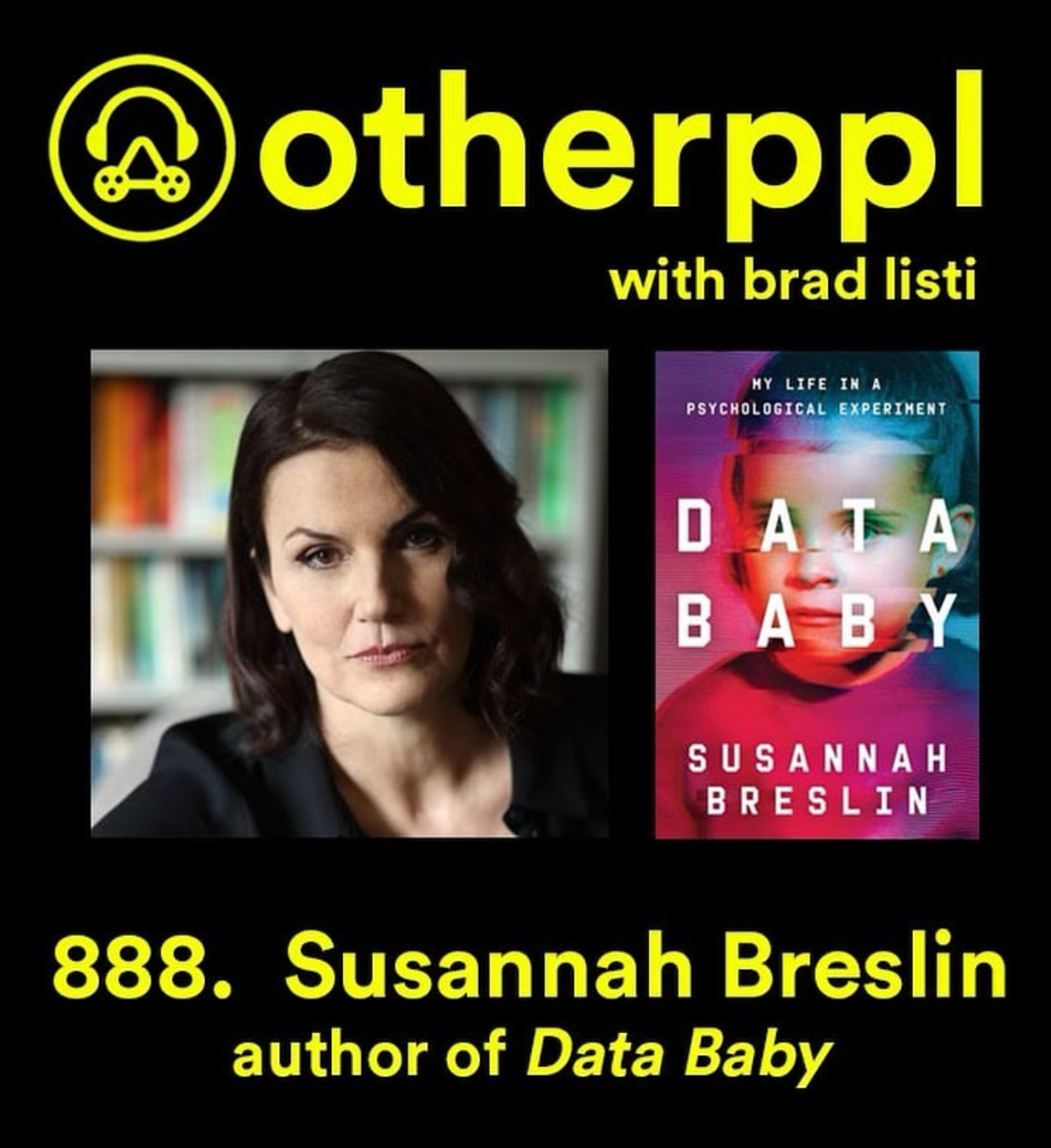
I really loved doing this interview with Brad Listi for his Otherppl podcast. What sets Brad apart is that he goes beyond interviewing the author about their book and really dives into the meat of their life, what made them who they are, what their story is. A lot of times, interviewers recite pre-written questions, or sort of follow the traditional format of interviewing a writer, or fall prey to the superficial premise of the author interview which is promoting the book. But Brad breaks the mold of what an author interview “should” be, and because of that, his author interviews are more like a conversation, one that ends up having kind of an alchemical effect. While my book, Data Baby: My Life in a Psychological Experiment, is a lot about a lot of things in my life, this interview also dove deeper into how I got started writing about sex and porn as an investigative journalist. One question caught me off guard, or rather caused me to hesitate considerably. At one point, Brad asked me what was the craziest thing I had seen while writing about sex, and the first thing that came to mind, was, well, pretty out there. Anyway, check out the interview to find out my answer, and make sure to check out Brad’s other Otherppl author interviews with authors who are a lot more famous than me, including Karl Ove Knausgård, Jonathan Franzen, Hilton Als, Maggie Nelson, Tim O’Brien, George Saunders, Melissa Febos, and Andres Dubus III.
My Book I About | My Blog I My Newsletter I X I Instagram I LinkedIn I Hire Me I Email